

Unit 7 of 9
Show Complexity and Write Clear Sentences

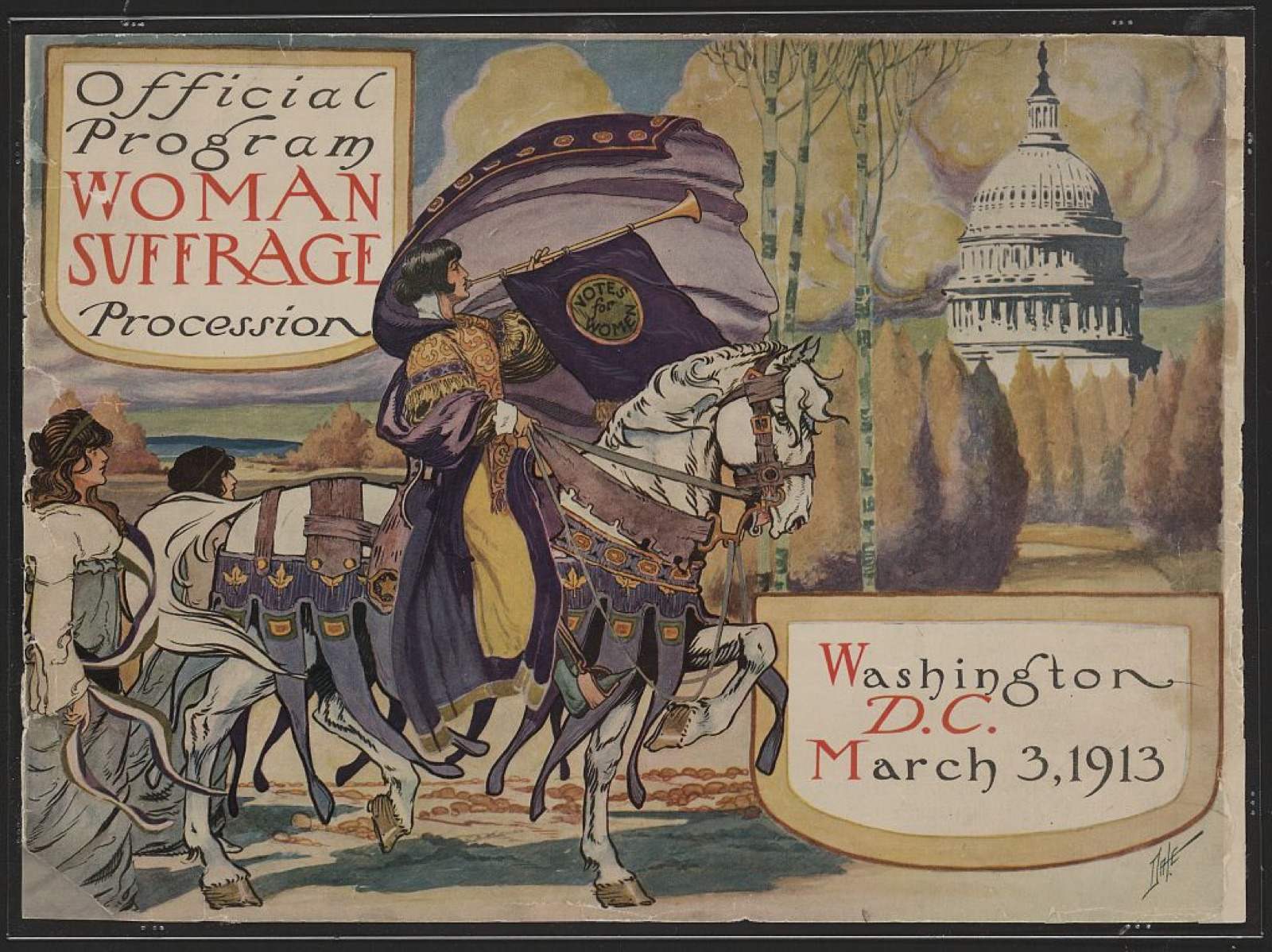
What you will learn
- Show that an issue has real tension without making your claim confusing.
- Use words such as 'although,' 'when,' and 'because' to show which idea matters most.
- Join complete sentences with the right punctuation and connecting word.
- Use commas, semicolons, and dashes to help the reader—not to make writing look fancy.
Learn it step by step
Complex does not mean complicated
A complex idea notices a real limit or conflict. Example: 'A long tradition can contain wisdom, but age alone does not make a rule fair.' The sentence is clear even though it holds two truths.
Put the main idea in the main clause
In 'Although the custom is old, it is unjust,' the opening part admits the other side; the final main clause states the writer’s position. Sentence structure tells the reader which idea wins.
Use the connecting word that matches your logic
Use 'and' to add, 'but' or 'yet' to contrast, 'so' for a result, and 'because' for a reason. Read both sides aloud and check that each is a complete thought when you use a comma plus and/but/so.
Punctuation gives directions
A comma creates a small pause or separates an opening phrase. A semicolon joins two closely related complete sentences. A dash interrupts with emphasis. Pick the mark that shows the relationship you mean.
Try this five-step routine
- Read once to understand what is happening. Do not mark every sentence.
- Read again and underline the one sentence that best shows the unit’s main skill.
- Say the writer’s move in ordinary words: 'The writer compares [name both ideas]' or 'The writer admits [name the fair point].'
- Add the purpose: 'This helps the audience understand, believe, feel, or do [name the response].'
- Check your answer against the exact words in the passage and make it no broader than the evidence.
Annotated passage
The Subjection of Women
Written by John Stuart MillPublished: 1869
The numbered highlights continue from the beginning to the end of this passage.
The object of this Essay is to explain as clearly as I am able, the grounds of an opinion which I have held from the very earliest period when I had formed any opinions at all on social or political matters, and which, instead of being weakened or modified, has been constantly growing stronger by the progress of reflection and the experience of life: That the principle which regulates the existing social relations between the two sexes–the legal subordination of one sex to the other–is wrong in itself, and now one of the chief hindrances to human improvement; and that it ought to be replaced by a principle of perfect equality, admitting no power or privilege on the one side, nor disability on the other.
The very words necessary to express the task I have undertaken, show how arduous it is. But it would be a mistake to suppose that the difficulty of the case must lie in the insufficiency or obscurity of the grounds of reason on which my conviction rests. The difficulty is that which exists in all cases in which there is a mass of feeling to be contended against. So long as an opinion is strongly rooted in the feelings, it gains rather than loses in stability by having a preponderating weight of argument against it. For if it were accepted as a result of argument, the refutation of the argument might shake the solidity of the conviction; but when it rests solely on feeling, the worse it fares in argumentative contest, the more persuaded its adherents are that their feeling must have some deeper ground, which the arguments do not reach; and while the feeling remains, it is always throwing up fresh intrenchments of argument to repair any breach made in the old. And there are so many causes tending to make the feelings connected with this subject the most intense and most deeply-rooted of all those which gather round and protect old institutions and customs, that we need not wonder to find them as yet less undermined and loosened than any of the rest by the progress of the great modern spiritual and social transition; nor suppose that the barbarisms to which men cling longest must be less barbarisms than those which they earlier shake off.
In every respect the burthen is hard on those who attack an almost universal opinion. They must be very fortunate as well as unusually capable if they obtain a hearing at all. They have more difficulty in obtaining a trial, than any other litigants have in getting a verdict.
What the numbered highlights show
- Mill states his purpose directly. He presents himself as someone who will reason through the issue, not simply announce anger.
- He explains that his belief survived years of thought. The contrast presents the position as tested rather than impulsive.
- Mill admits that the task is hard. This prepares readers for the strongest difficulty instead of hiding it.
- He locates the obstacle in deeply rooted feeling, not simply missing facts.
- The if/then logic explains why evidence may change a reasoned belief but fail against a belief held mainly through feeling.
- Mill shifts from his own case to a general rule: challenging a popular belief places extra work on the challenger.
- The final condition stresses how hard it is even to be heard before the argument can be judged.
Rhetorical techniques in this passage
Each technique points to the numbered highlight where it appears. Hover over or focus the technique name for a definition.
Statement of purposeHighlight 1: “The object of this Essay is to explain as clearly as I am able”
Mill states his purpose directly. He presents himself as someone who will reason through the issue, not simply announce anger.
ContrastHighlight 2: “instead of being weakened or modified, has been constantly growing stronger”
He explains that his belief survived years of thought. The contrast presents the position as tested rather than impulsive.
ConcessionHighlight 3: “The very words necessary to express the task I have undertaken, show how arduous it is”
Mill admits that the task is hard. This prepares readers for the strongest difficulty instead of hiding it.
Appeal to pathosHighlight 4: “The difficulty is that which exists in all cases in which there is a mass of feeling to be contended against”
He locates the obstacle in deeply rooted feeling, not simply missing facts.
Conditional reasoningHighlight 5: “if it were accepted as a result of argument, the refutation of the argument might shake the solidity of the conviction”
The if/then logic explains why evidence may change a reasoned belief but fail against a belief held mainly through feeling.
GeneralizationHighlight 6: “In every respect the burthen is hard on those who attack an almost universal opinion”
Mill shifts from his own case to a general rule: challenging a popular belief places extra work on the challenger.
Appeal to ethosHighlight 1: “The object of this Essay is to explain as clearly as I am able”
Mill states his purpose directly. He presents himself as someone who will reason through the issue, not simply announce anger.
Appeal to logosHighlight 5: “if it were accepted as a result of argument, the refutation of the argument might shake the solidity of the conviction”
The if/then logic explains why evidence may change a reasoned belief but fail against a belief held mainly through feeling.
John Stuart Mill, The Subjection of Women (1869). View the source edition.
See how the analysis works
Mill knows that many readers trust long-standing customs. He does not ignore that belief. He admits it and then argues that defenders of unequal power still need proof. The 'although/but' structure lets him recognize the other side while keeping his main judgment clear.
Practice with five comparable passages
These public-domain speeches, essays, and arguments let you practise the same skill with a new passage. Each link opens the named source edition.
social and philosophical argument
The Subjection of Women
Why read it: Locate concession, qualification, and main-clause emphasis in sentences that challenge inherited custom.
Project Gutenberg public-domain edition of Mill’s argument.
Open this public-domain sourcephilosophical essay
On Liberty
Why read it: Compare how Mill limits a principle, anticipates objections, and keeps the main claim precise.
Project Gutenberg public-domain edition of Mill’s essay on liberty.
Open this public-domain sourcesocial and philosophical essay
Woman in the Nineteenth Century
Why read it: Study how Fuller handles counterarguments without allowing long sentences to hide the central claim.
Project Gutenberg public-domain edition of Fuller’s essay.
Open this public-domain sourceeconomic and social argument
Women and Economics
Why read it: Identify where Gilman makes a broad claim, supplies a condition, and qualifies the claim to fit the evidence.
Project Gutenberg public-domain edition of Gilman’s economic argument.
Open this public-domain sourcepolitical correspondence
Familiar Letters of John Adams and His Wife Abigail Adams During the Revolution
Why read it: Compare two writers’ positions and see how audience, concession, and sentence emphasis change within a debate.
Project Gutenberg public-domain edition of the Adams correspondence.
Open this public-domain sourceMultiple-choice skill check
Read the source excerpt or passage lines below. Keep them in view while you answer each question.
Although custom can preserve useful practices, longevity alone cannot justify a rule that denies equal liberty without evidence of necessity.
Although the arrangement is longstanding, its defenders still bear the burden of showing why unequal authority is necessary.
The custom is old; age alone does not establish justice. Or: The custom is old, but age alone does not establish justice.
Mill’s argument, published in 1869, places the burden of proof on defenders of inequality.
Mill’s argument becomes more defensible when it distinguishes respect for experience from automatic deference to custom.